
The Business Of Youth Soccer In Massachussets
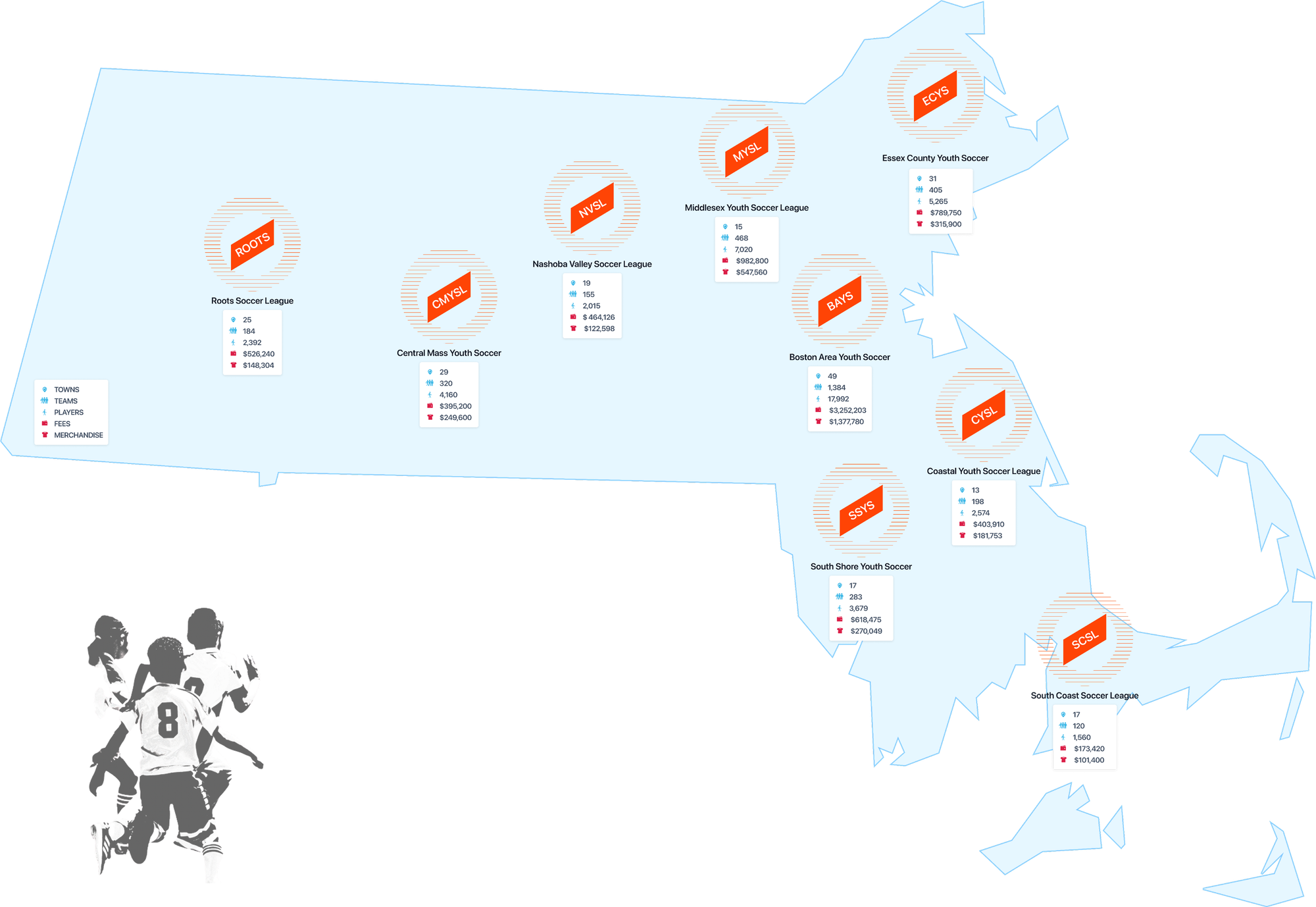
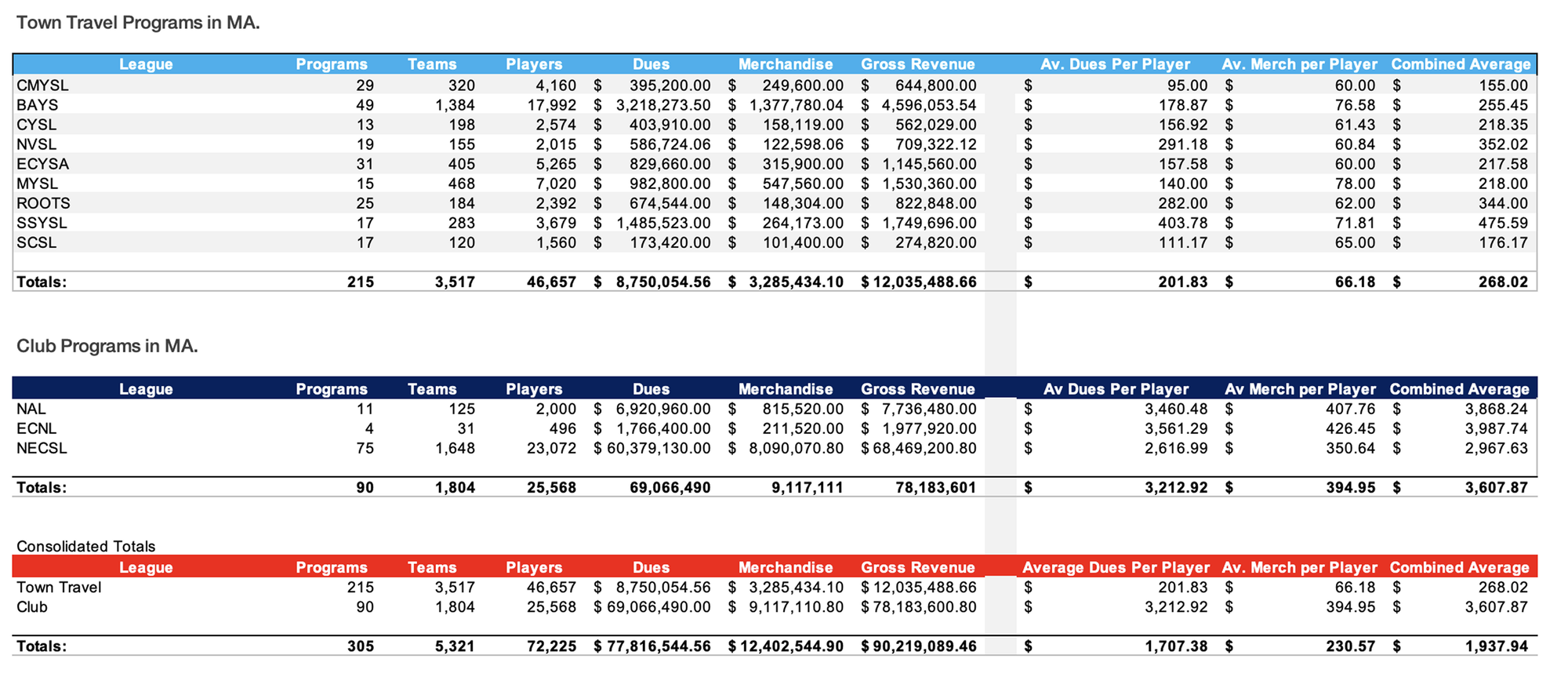
Each year, Youth Soccer Club programs generate in excess of $79,000,000 in dues and merchandise with families willing to pay an average of $2,700 to play on a team.
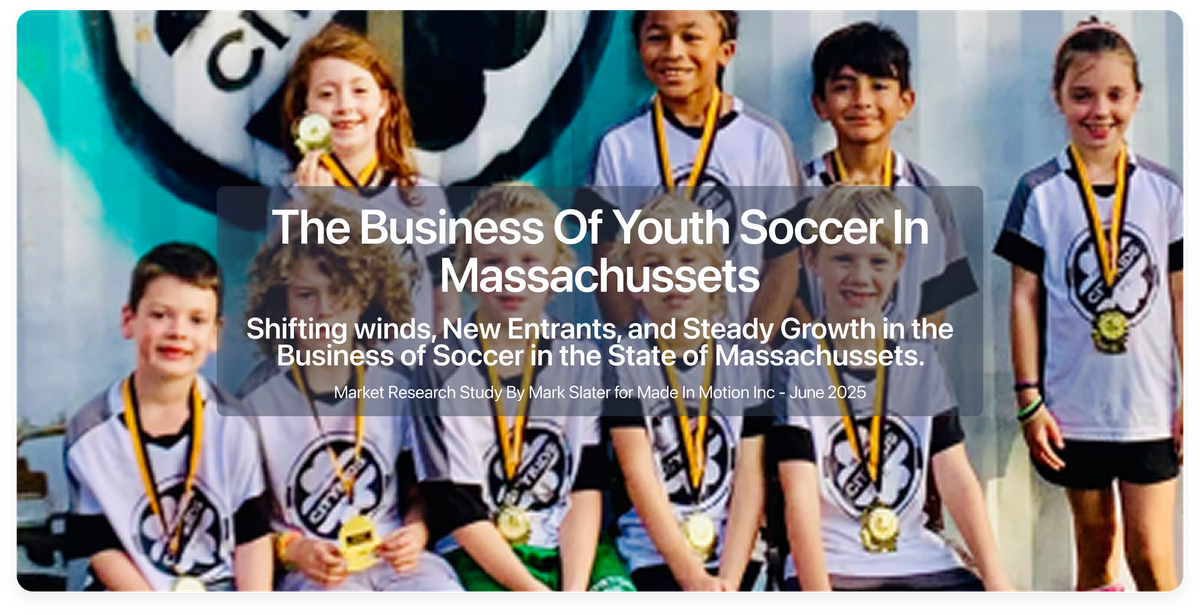
Since i released the Youth Sports Industrial Complex Study in December of 2024, it feels like the world has changed dramatically, and that is certainly the case in Youth Sports in the US and specifically the business of Youth Soccer here in Massachusetts.
As i write this, a battle for players and families is ongoing in multiple regions south of Metro Boston in the Soccer Club sector and for good reason.
The stakes are high. Each year, Youth Soccer Club programs in MA generate in excess of $79,000,000 in dues and merchandise with families willing to pay an average of $2,700 to play on a team. Staggering... were in not for the fact that these numbers continue to increase at double-digit % a year with no clear sign of abating.
In this report, i attempt to answer a few key questions:
- What is driving this irrational spending by families?
- Who is winning and losing?
- Can we see over the near horizon and spot trends or Black Swans?
- Whats missing? what are the opportunities?
- What are the set of outcomes for our children?
My fascination with Youth Sports in the US stems from my journey as a father of 3 active and competitive kids, and as the founder and director of a Youth soccer Program in Boston called City Sports Programs Inc.
Over the years, this fascination has taken on a healthy dose of negative predispositions to the absurdity of situations we all find ourselves in. This report along with past and future efforts (hockey is next!) is my selfish attempt to rationalize these behaviors all through the lens of a parental journey.
I’ve long held the view that as my children came in to this world they essentially checked in to Hotel Slater on an 18 year stay, after which they would never return. I wake up each morning with the simple goal of enjoying each and every moment of my wonderful little guests. Its a simple but effective calibration tool for me.
Some years ago now, the business of youth sports showed up in my hotel lobby and upended things overnight. Unfortunately mostly in a negative way. If you, like me have such guests on your property, take a breath.... its gonna be ok!
Lets jump in and try and understand this unruly interloper. After all, that which we spend the time to get to know brings calm with its familiarity.
Massachusetts Youth Soccer Market Size
The Player Pathway
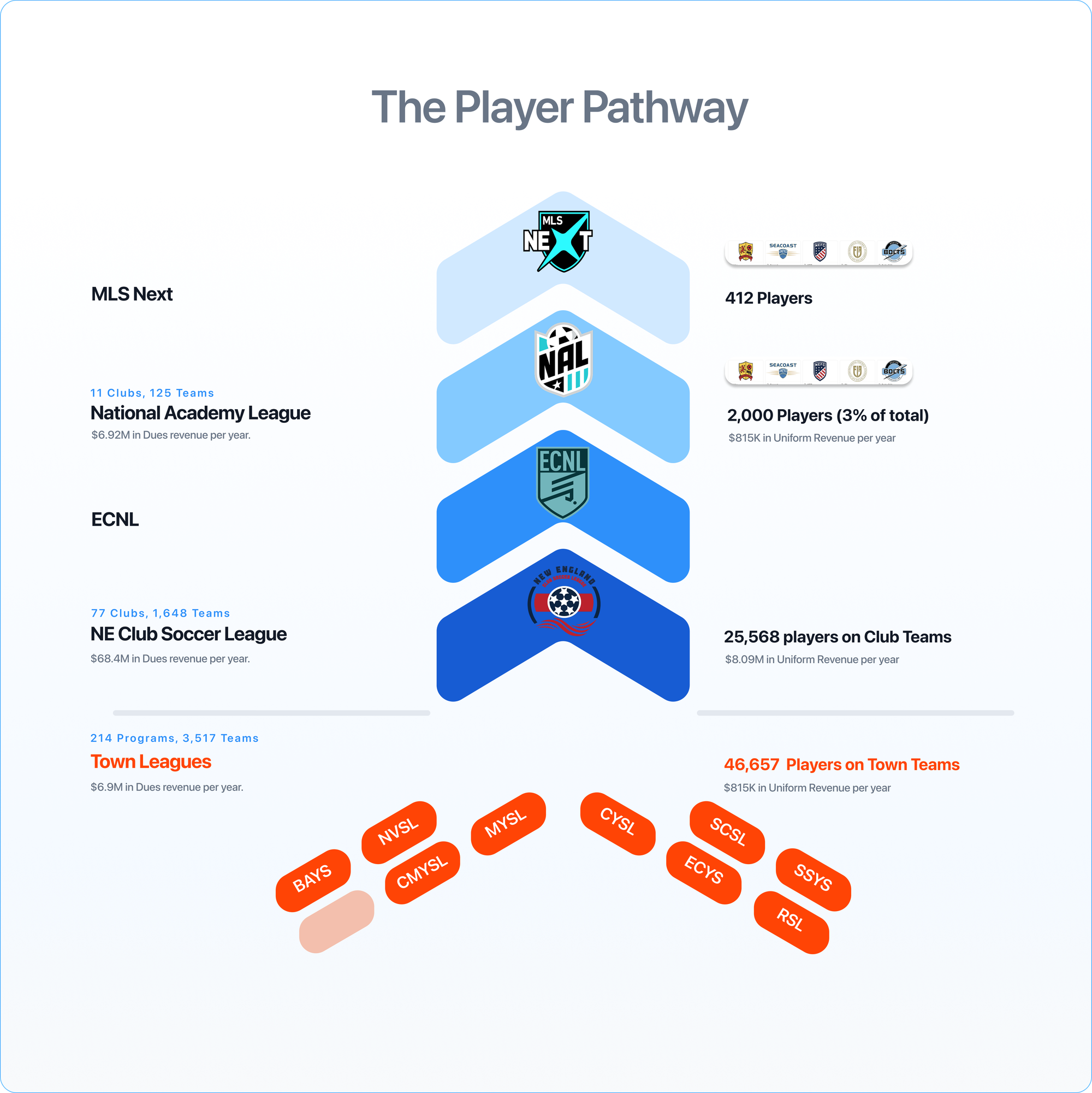
Most clubs and many of the town programs in MA talk about their own versions of the “Player Pathway”. This is used to varying degrees as a “Hook”.
The player pathway as visualized below represents the Actuator of desire (Trigger) within the Hooked methodology. The parent is presented with a visual path to enlightenment of sorts, along with the steps up the hill to get there.
This of-course is understandably beyond the reach of 99.9% of our children. Nonetheless, being presented with this, a parent naturally actuates and thus enters the cycle that all to often ends in the zone of irrational spending.
The Hooked Methodology
Understanding the Psychology of the Player Pathway
Most clubs and many of the town programs in MA talk about their own versions of the “Player Pathway”. This is used to varying degrees as a “Hook”.
The player pathway as visualized below represents the Actuator of desire (Trigger) within the Hooked methodology. The parent is presented with a visual path to enlightenment of sorts, along with the steps up the hill to get there.
This of-course is understandably beyond the reach of 99.9% of our children. Nonetheless, being presented with this, a parent naturally actuates and thus enters the cycle that all to often ends in the zone of irrational spending.
Showing a prospect the “top of the hill” or “The end of the journey” has the psychological effect of both manufactured desire and confirmation of complete. If a person is able to see the end, and more importantly their progress in their efforts to reach that endeavor, they are far more likely to continue its pursuit, especially when the game mechanics of competition are introduced. Put in to real world terms:
Parents are activated by their desires:
- For their children to achieve levels of success that they never attained but are convinced they could have.
- For their children and by association themselves to be viewed at the top of their peer group.
Negative outcomes of the irrational pursuit of endowed progress
- Referee Treatment:
- Parental Behavior:
- The theatre of progress: Gossip, tribalism and bowing to illusionary pressures.
- The fallacy of quality: The US is a dominant force in nearly every single sporting category. Except for soccer: Why?
Some thoughts / possible reasons i need to expand upon below:
- The rules folly - banning the header
- The absence of relegation
Bad Actors in the Market
Every market has bad actors. Mass state soccer is no exception. In the 9 years that my children have been participating at different levels within the sport, there has been an un-ending list of eye-opening incidents of questionable behavior by any manor of participants from parents up to league directors and club owners.
But it became really obvious and concerning when we took the leap in to building a community program during the Covid pandemic. This requires a separate post to unpack.
Boston Area Youth Soccer League (BAYS)
A snapshot of the largest of all the states town leagues.
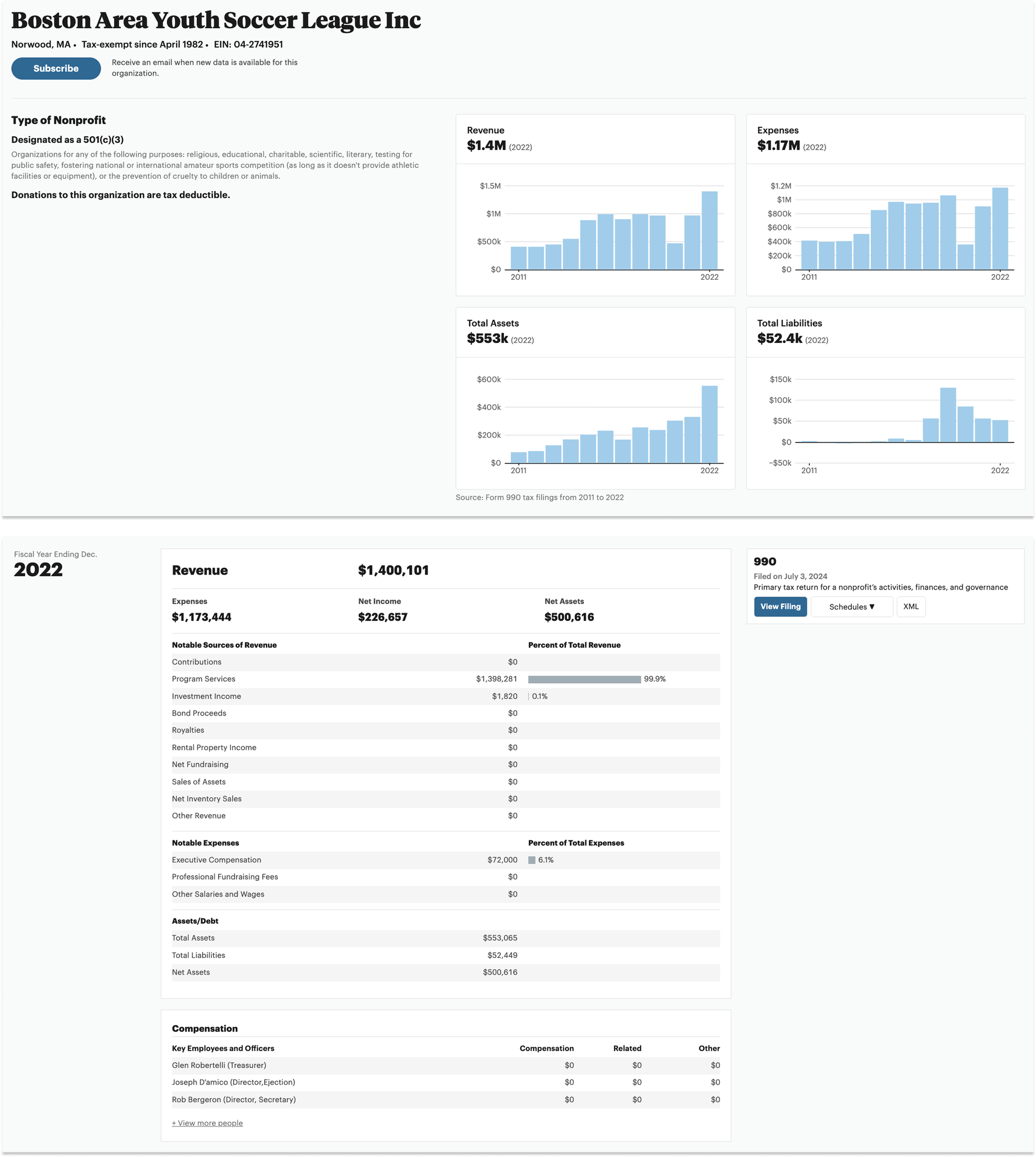
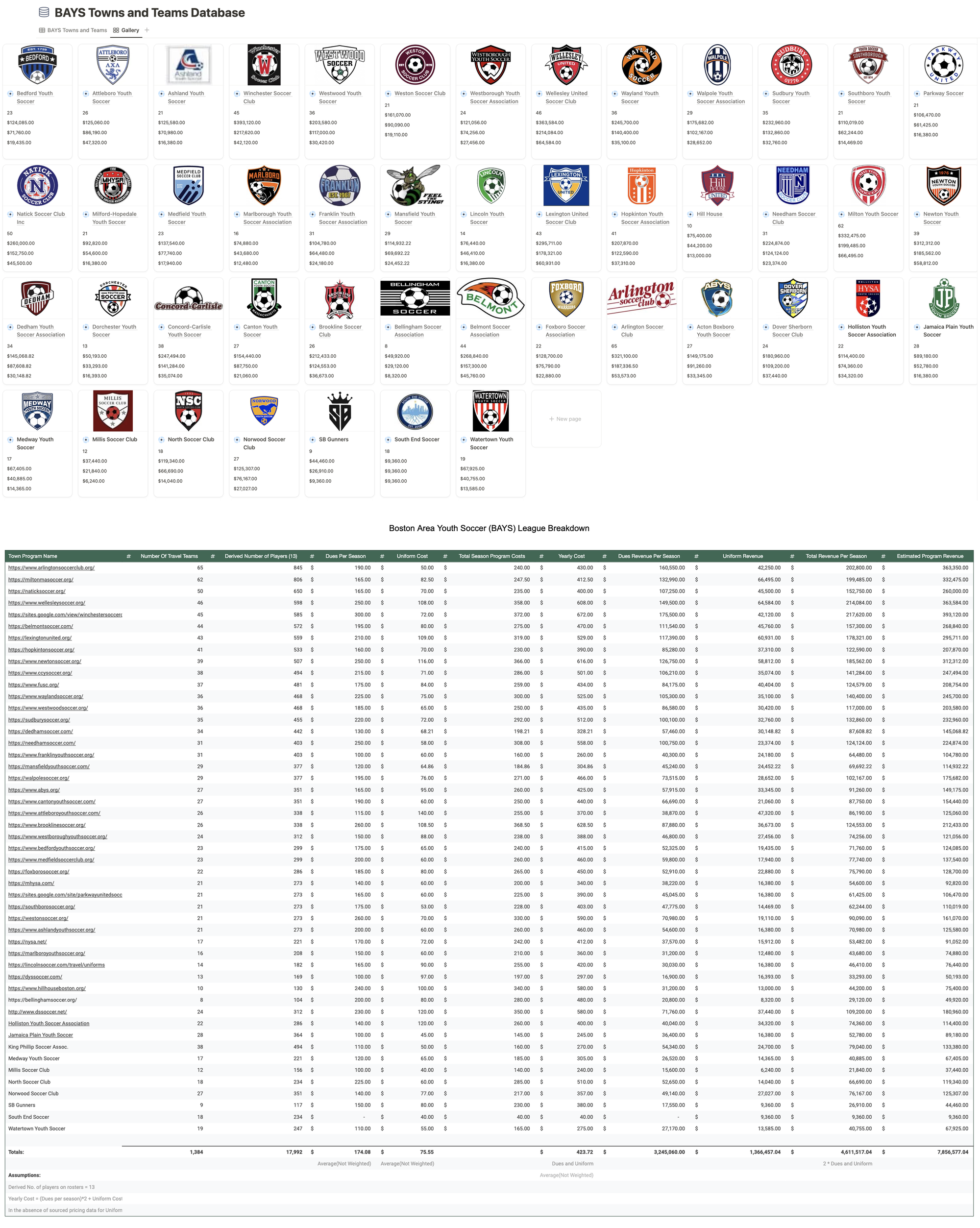
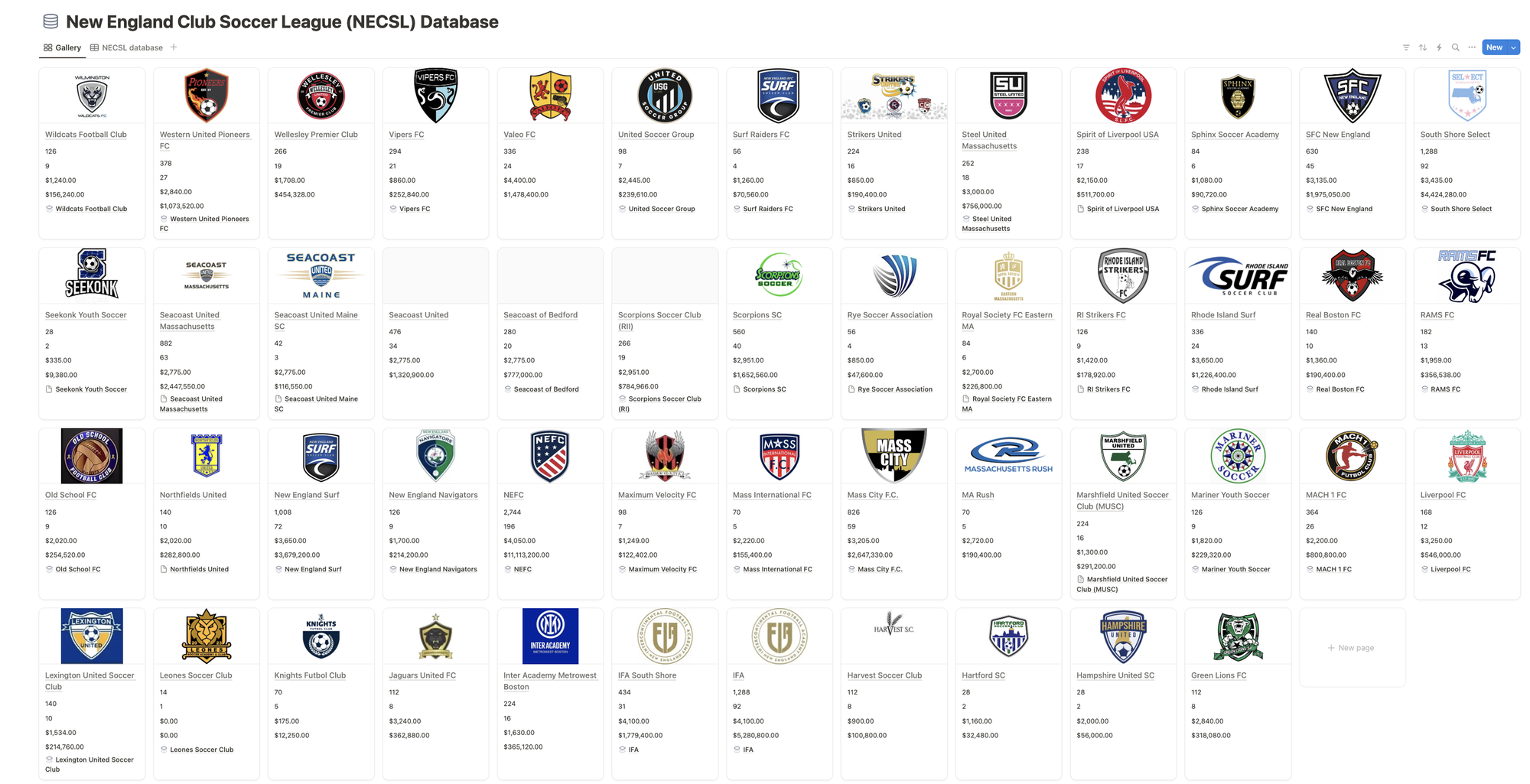
We have compiled a database containing key details of every program in the state - below is a snapshot of the largest club league.
Conclusion
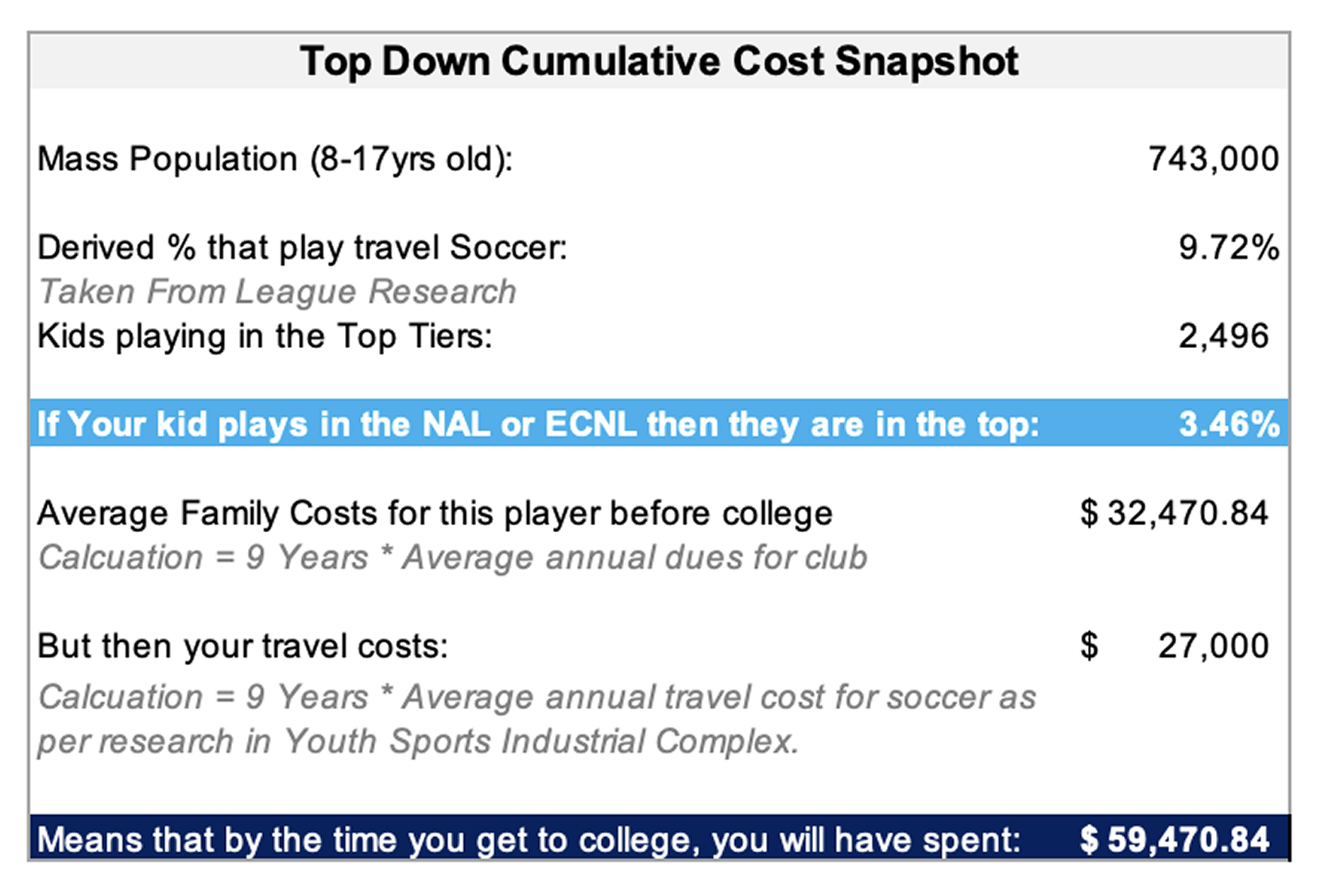
The market size coupled with the historical and forecasted participation growth rates for youth soccer in MA Alone are staggering. The only rational explanation for this is the existence of an extreme version of the Veblen Syndrome. Its not drivers rooted in rational outcomes like college scholarships.
Don’t believe me? Hold my Fresca. (Report on College Scholarships in separate post)